
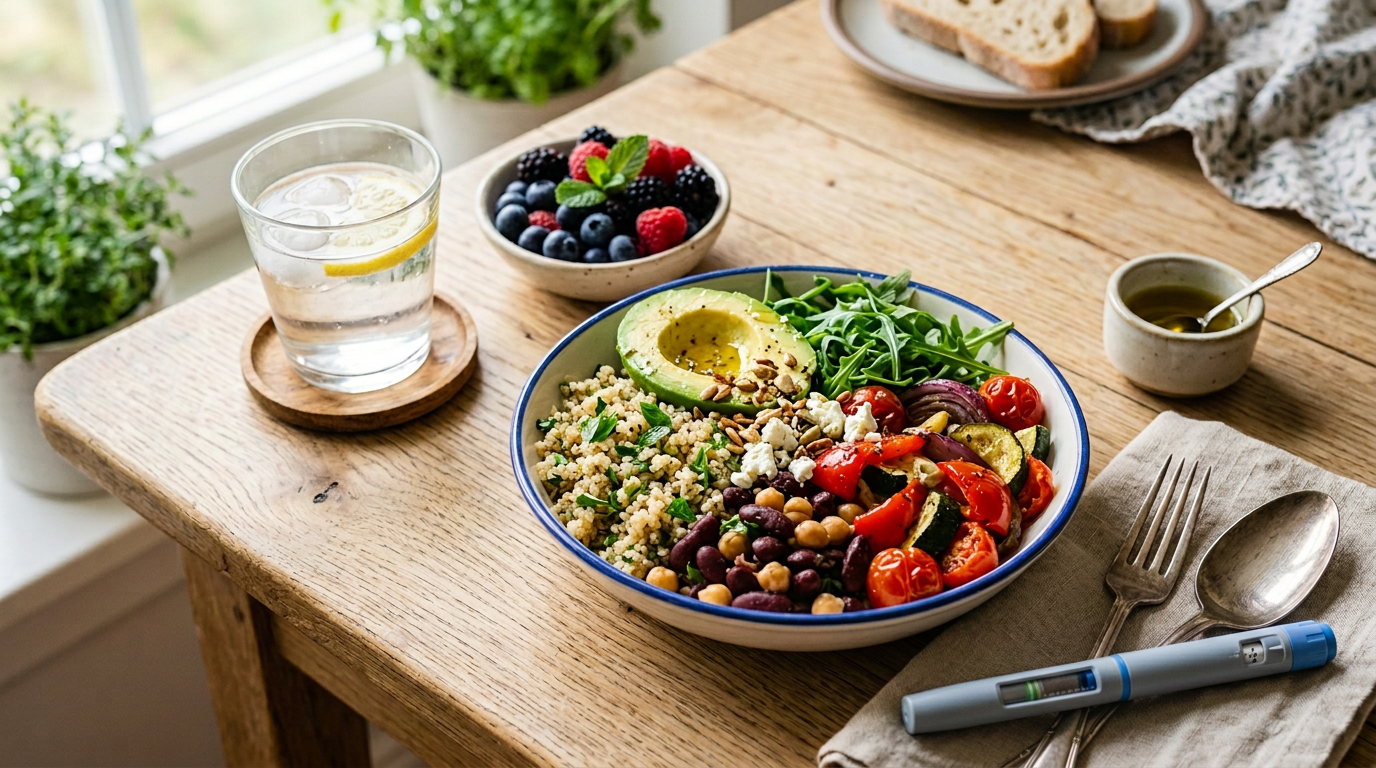
You may have heard about GLP-1 medications, or perhaps you know someone who is using one and has experienced significant weight loss.
GLP-1 medications can be a helpful tool for weight management. At the same time, food, movement, sleep, and stress management all play an important role in how you feel during treatment and in supporting your health over time.
Think of these lifestyle habits less as a set of rules and more as ways to give your body the nutrition and support it needs. In this article, we’ll focus on food, and I will provide a menu plan example. Exercise will be covered in a future article.
What are GLP-1 medications?
In simple terms, GLP-1 medications work on some of the same receptors as hormones naturally produced by our bodies. They can slow the movement of food through the stomach, influence insulin and blood sugar regulation, and reduce appetite.
Because of this, many people find that they feel full sooner and stay full longer. Eating less can then lead to weight loss.
One important thing to remember is that everyone responds differently.
Some things to keep in mind
There are a few areas worth paying attention to when using GLP-1s: digestive symptoms, getting enough nutrients, and maintaining muscle mass.
Because these medications affect digestion and appetite, some people experience symptoms such as nausea, reflux, vomiting, diarrhea, or constipation. Some people may also notice that they don’t feel as thirsty as usual.
Eating less can also make it harder to get enough protein, fiber, vitamins, minerals, and other important nutrients. This can be especially challenging if nausea, vomiting, or diarrhea makes eating difficult.
And when we lose weight, we naturally lose a combination of fat and lean tissue. Maintaining as much muscle as possible is important for strength, everyday function, and metabolic health. Nutrition, along with resistance or strength training, can help support muscle while you’re losing weight.
The good news is that there are simple ways to build supportive habits around your medication, as we will explore next.
Lifestyle habits can make a difference
GLP-1 medications can be an effective part of a weight-management plan, but they don’t replace healthy lifestyle habits. Instead, they can make some of those habits easier to maintain by reducing appetite and helping you feel satisfied with smaller amounts of food. Food, movement, sleep, and stress management can all contribute to how you feel and how well you maintain your health over time.
There is also an important shift in mindset here: when you’re taking a GLP-1, food and exercise don’t need to feel like punishment or a way to “make up” for what you’ve eaten. Instead, they can be ways to support your energy, digestion, strength, and overall well-being. Food and movement are your friends and not your punishment.
Foods that can support your GLP-1 journey
Because you may be eating smaller amounts, the nutritional quality of your meals becomes especially important. Choosing foods that offer plenty of nutrients in a relatively small portion can help you get more of what your body needs.
Think whole grains, fruits, vegetables, beans, lentils, lean proteins, nuts, seeds, and other minimally processed foods.
Grains
Whole grains and pseudo-grains such as quinoa, brown rice, farro, bulgur, buckwheat, and barley can be great additions to your meals. They provide fiber, vitamins, minerals, and carbohydrates for energy.
Fiber can also be helpful for keeping bowel movements regular, which may be particularly useful if constipation is an issue.
Here’s a meal-prep tip: cooking grains or potatoes ahead of time and allowing them to cool can increase their resistant starch content, which studies show it’s beneficial for gut health and immunity.
Fruits and vegetables
Fresh, frozen, or cooked fruits and vegetables are all great options. Try to include a variety of colors and types throughout the week, ideally in their whole forms to preserve the fiber and the nutrient matrix.
Soups and smoothies can be a convenient option is appetite is low, as liquids are usally better tolerated than solid food. Plus, they mantain the fiber and contribute to hydration. Juices, on the other hand, are usually depleted of fiber and high in sugar, even the natural ones.
Fats
Dietary fat is an important part of a healthy diet. It helps with the absorption of certain vitamins and plays several important roles in the body. At the same time, fat is calorie-dense and can take longer to digest. Some people find that large or high-fat meals feel particularly uncomfortable while taking a GLP-1.
You might find that smaller amounts of foods such as nuts, seeds, avocado, olives, and natural nut butters work well for you. Oils can also be part of a healthy diet, including olive oil. I recommend using modest amounts to make it easier to keep meals comfortable and appropriately sized.
As always, your own tolerance matters. If a particular food makes you feel uncomfortable, there’s no need to force it.
Protein
Protein deserves special attention during weight loss because it can help support muscle mass, particularly when combined with strength training. Good options include poultry, fish, eggs, beans, lentils, soy foods, legume-based pasta, quinoa, buckwheat, and other whole grains. Some people find that leaner protein sources are easier to digest while taking a GLP-1. Higher-fat cuts of meat, such as ribeye, may feel heavier because GLP-1 medications can already slow digestion.
As a general reference, aim for at least 1.6x [your target body weight in kg] grams of protein per day. For example, if your target body weight is 60kg, you need at least 1,6 x 60 = 96g of protein daily. Keep in mind thought that protein needs vary from person to person, so there isn’t one perfect number for everyone.
Another general rule is to distribute protein throught the day. For example, a meal containing around 20–30 grams of protein and a snack containing around 10-20 grams can be a practical target for many adults, but again, your individual needs may be higher or lower depending on your body size, age, activity level, health, and goals.
Dairy
Dairy foods work well for some people, while others notice that they don’t feel as comfortable with them, particularly when their digestion is already sensitive.
If you tolerate dairy, lower-fat options may be easier to fit into your meals. If dairy doesn’t agree with you, fortified plant-based beverages can be a useful alternative. Unsweetened soy milk is one particularly nutritious option because it provides a similar amount of protein to cow’s milk.
Eggs
Eggs can be part of a balanced diet, as they provide protein and several important nutrients. But one downside of eggs is the saturated fat and cholesterol content.
If you’re finding higher-fat meals difficult to digest, you might enjoy an omelet or scramble made with one whole egg plus additional egg whites. This can increase the protein without adding as much fat.
As with many foods, preparation matters too. Baked, boiled, poached, or scrambled eggs may feel more comfortable than heavily fried versions.
Hydration
Staying hydrated is especially important when your appetite and thirst have changed. Water is a simple place to start. Your individual fluid needs vary depending on factors such as your body size, activity, climate, and health, so rather than focusing on one number for everyone, try to drink regularly throughout the day. If you need a more structure guideline, 8 glasses of 8 oz each is the popular rule.
Unsweetened herbal teas can also be a nice option. Ginger tea, for example, may be soothing for some people experiencing nausea.
If carbonated drinks make you feel bloated or uncomfortable, you may want to limit them. Coffee and tea can fit into your routine too, as long as you tolerate them well.
Keep food preparation simple
Simple meals can be especially appealing when your appetite is smaller or your stomach feels sensitive. Steaming, baking, grilling, roasting, microwaving, sautéing, air-frying, and stewing can all work well. You don’t need elaborate recipes to eat nutritious food.
If rich sauces or large amounts of added fat leave you feeling uncomfortable, try lighter preparations and add flavor with herbs, spices, lemon, vinegar, or fresh ingredients.
Portions and meal timing
One of the biggest changes you may notice with a GLP-1 is how quickly you feel full. Instead of trying to finish a portion simply because it’s on your plate, give yourself permission to stop when you feel comfortably satisfied.
Smaller meals may feel better than large ones. Many people do well with three meals a day, while others prefer to include a small snack when needed.
If your appetite is very low, it can sometimes be helpful to eat something nutritious at regular intervals rather than waiting until you feel extremely hungry.
Your body may need some time to adjust, so think of this as an opportunity to learn what portions and meal timing feel best for you.
Foods you may want to limit
There isn’t necessarily a single list of foods that everyone taking a GLP-1 needs to avoid. That said, highly processed foods can sometimes make it harder to get enough nutrients and fiber when you’re eating less. Foods that are very high in added sugar, sodium, or fat may also feel less comfortable for some people.
Convenient foods can absolutely have a place. Canned beans, tuna, frozen vegetables, and other minimally processed foods can save time and still provide plenty of nutrition. When possible, look for options with little or no added sugar and lower sodium.
What about alcohol?
Alcohol may be more difficult to tolerate while taking a GLP-1. For some people, it can contribute to nausea, reflux, dehydration, sleep disruption, or reduced appetite.
If you choose to drink, it’s worth paying attention to how your body responds and discussing alcohol use with your healthcare professional, particularly if you have other health conditions or take additional medications.
A GLP-1-friendly eating plan
That’s a lot of information to take in! No worries, I have prepared a weekly plan example for you, including both omnivore and plant-based options for each suggested meal.
A weekly template can make things easier by giving you a starting point while still leaving plenty of room for flexibility. You can mix and match breakfast, lunch, snacks, and dinner based on your preferences, appetite, and schedule.
Variety is helpful, too. For example, if you enjoy chickpeas, you don’t need to have chickpeas at every meal. Rotating beans, lentils, tofu, fish, poultry, eggs, and other protein sources throughout the week can keep meals interesting while giving you a wider range of nutrients.
Meal prep can also make things easier. You might cook a larger batch of grains, potatoes, beans, or vegetables and use them in different meals throughout the week. Cooking once and eating several times can be a real time-saver.
The menu is plant-forward and mediterranean inspired, as these are the eating patterns that the science has demonstrated are the most health promoting.
Regarding amounts, eat until you feel about 80% full. That is, satiated but not stuffed. On GLP-1, this may happen relatively soon, with smaller portions. It can take some trial and error to figure out what portion sizes feel right. That’s completely normal. Your needs may also change from day to day. Some days you may be hungrier; other days, a small meal may be plenty.
| Day | Breakfast | Lunch | Snack | Dinner |
| Monday | Oatmeal with walnuts and berries, made with soy or low fat milk | Whole wheat chickpea or tuna salad sandwich (limit mayo) | Fresh apple and peanut butter with cinnamon and cocoa nibs | Veggie stir-fry with tofu or chicken and brown rice |
| Tuesday | Tofu or egg scramble with veggies, slice of whole grain bread, and citrus fruit | Quinoa, chickpea and sunflower seed salad | Soy or low fat dairy yogurt with natural applesauce and sliced almonds | Grilled tempeh or fish with steamed greens and boiled potato |
| Wednesday | Smoothie with frozen fruit, flax seeds, and soy or low fat milk; optional protein powder | Whole wheat or legume pasta with mixed vegetables, TVP or turkey and marinara | Chia pudding made with acai purée and soy or low fat milk, with fresh fruit | Sweet potato stuffed with black beans and avocado, and green salad |
| Thursday | Whole wheat bread with nut butter and fruit; soy or low fat milk latte | Lentil salad with carrots, tomatoes, raisins, almonds and green onions | A handful of nuts and a piece of fresh fruit | Marinated tofu or chicken skewers with a whole grain (i.e. brown rice) and broccoli |
| Friday | Fresh fruit salad with hemp hearts, walnuts, yogurt and cinnamon | Edamame, corn, tomato and cucumber salad | Roasted chickpeas | Bean or meat burger patties with greens, mustard and coleslaw (no mayo). |
| Saturday | Overnight oats and chia seeds, made with soy or low fat milk, berries and cinnamon | Oil-free hummus and vegetables in a whole wheat pita or wrap | Roasted edamame | Veggie sheet pan with tempeh or chicken and herbs and a slide of bread |
| Sunday | Mashed sweet potato with nut butter and berries; soy or low fat milk latte | Mixed greens, grains and tofu or chicken salad | Strawberries and a 70% cocoa dark chocolate | Whole grain pasta with lentil or meat bolognese |
Conclusion
I hope this article gave you a helpful starting point for navigating food and nutrition while taking a GLP-1. There’s no need to get everything perfect. Small, consistent choices that help you feel nourished, comfortable, and energized can go a long way.
Food is an important part of the GLP-1 lifestyle picture, but there’s another piece we haven’t explored yet: movement.
Stay tuned for a future post where we’ll talk about exercise and ways to support strength, energy, and overall well-being while taking a GLP-1.
Be well,
Isabel


One thought on “Optimizing Nutrition to Support GPL-1 Medications”