
Who hasn’t experienced occasional stomach pain, slow digestion, or heartburn? And maybe has reached for an antiacid or another medication to help relieve these uncomfortable symptoms?
Traditional yoga, rooted in Indian tradition, offers benefits that extend beyond physical exercise. One of these potential benefits is support for occasional digestive discomfort. However, it is important to remember that yoga is a complementary practice and is not intended to diagnose, treat, cure, or prevent disease. If you experience recurrent or persistent digestive symptoms, consult a healthcare professional.
Minor abdominal discomfort can sometimes be associated with digestive imbalance, slow intestinal movement, difficulty eliminating waste, or gas. These symptoms may also be exacerbated by an overactive nervous system. Yoga may help address both the physical and mental factors that can contribute to occasional digestive discomfort.
From a mental perspective, yoga can promote relaxation and support activation of the parasympathetic nervous system, often referred to as the “rest and digest” system. When its counterpart, the sympathetic nervous system, is activated, the body prioritizes the stress response and the functions needed to respond to a perceived threat. Digestion is not a priority during this “fight-or-flight” response. Slow, intentional breathing and restorative yoga poses may help encourage relaxation and parasympathetic activity.
From a physical perspective, movements such as squats, forward folds, side bends, and twists may gently mobilize the abdominal area and encourage movement and circulation within the body.
The following yoga sequence brings these elements together, combining mindful breathing with carefully selected yoga poses, or asanas. I personally practice this sequence when I experience digestive discomfort, and I have consistently found it helpful.
Throughout the sequence, we will follow a 4-6-8 breathing pattern: inhale for 4 counts, hold for 6 counts, and exhale for 8 counts. If comfortable, inhale and exhale through the nose.
Props needed
- One bolster, two yoga blocks and an optional blanket.
- Alternatively, you can use a firm, thick pillow, like a couch pillow; two thick books or sturdy boxes; and a beach or bath towel, respectively. Feel free to get creative with what you have available—for example, a rolled-up hoodie can also provide support.
- Props provide additional support and help promote relaxation. However, if you do not have any props available, you can still practice the sequence.
Duration
- About 30 minutes.
Warm up
Note: The poses used in the sequence are basic and beginner-friendly. For detailed instructions, proper alignment, and illustrations of each pose, I recommend consulting the pose libraries from Yoga Basics or Yoga Journal.
- Easy or cross-legged seat: Begin by noticing how your body feels, without judgment. You may scan your body from head to toe if that feels helpful. If you wish, set an intention for your practice. Then begin breathing slowly and mindfully, allowing your breath to travel deeply into your belly and throughout your torso. We are not using the 4-6-8 breathing pattern just yet. Complete approximately 10 rounds of slow, mindful belly breathing.
- Stir the pot with gentle chest circles: make four circles in one direction, then reverse for another four. Inhale as you lift and open your chest, and exhale as you round your back.
- Side bends: Gently bend from side to side a few times. Inhale as you bend to the side, and exhale as you return to the center.
Main sequence
- Downward-Facing Dog: Begin the 4-6-8 breathing pattern and complete 4 full cycles in the pose. If you have GERD, skip this asana, as inversions may aggravate symptoms.
- Child’s Pose: Pause here and notice how you are feeling. You may already feel more relaxed.
- Low Lunge: Bring one leg forward. You can keep the back knee on the floor or lift it for a more active variation. Place your hands on the floor or on blocks beside your front leg. Complete 3 cycles of 4-6-8 breathing, then repeat on the other side.
- Yogi Squat: Complete 3 cycles of 4-6-8 breathing. Skip this pose if you have knee issues, or sit on one or two blocks to reduce the load on your knees.
- Staff Pose: Sit with your spine long and your legs extended straight in front of you, keeping your legs active. Complete 4 cycles of 4-6-8 breathing.
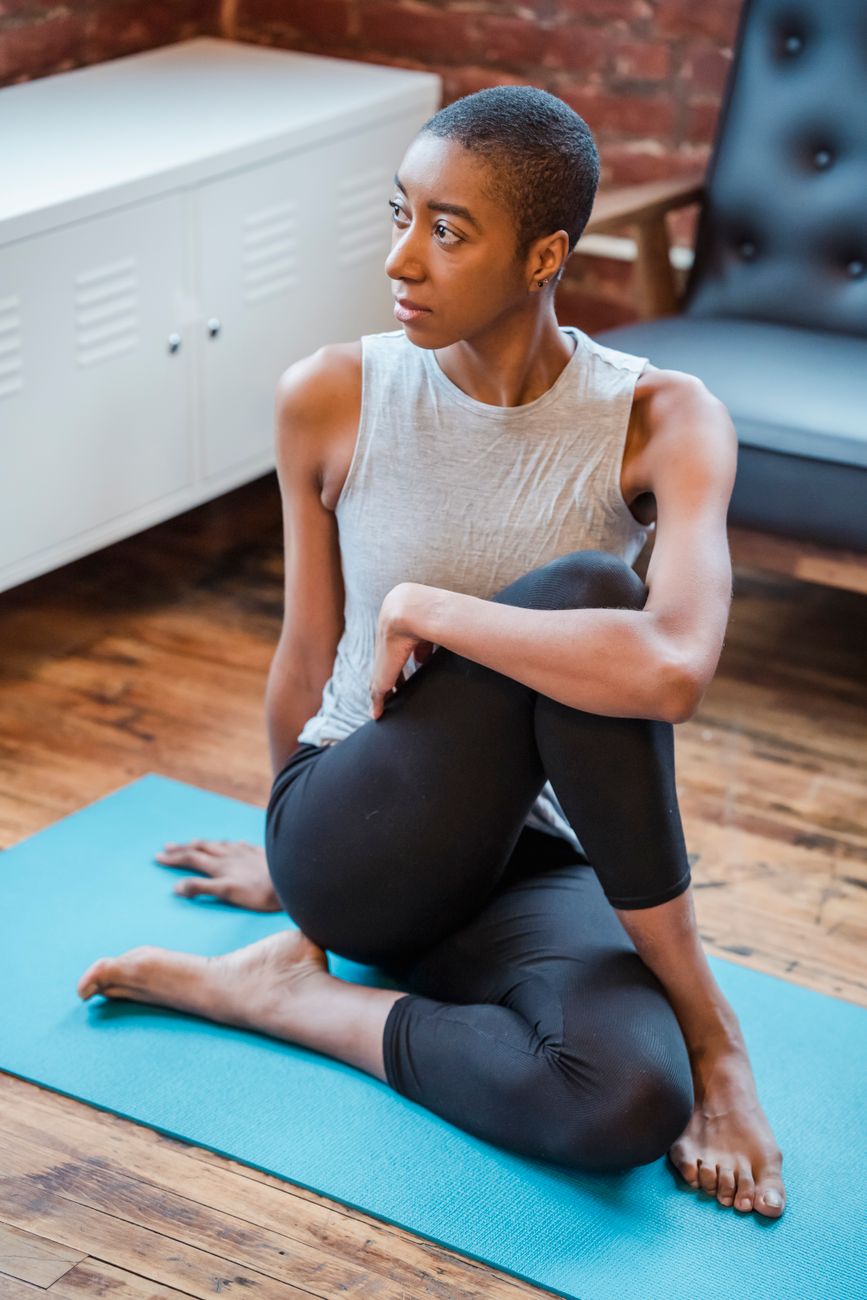
- Seated Twist: Keeping your spine long, gently twist to one side. Complete 8 cycles of 4-6-8 breathing, then repeat on the other side. Approach this asana with caution if you have GERD.
- Side Twist in Half Firefly: Open your legs into a straddle, then bend one knee and bring that foot toward the opposite groin. Lean your torso sideways toward the extended leg while keeping your chest facing forward. Place your lower hand on the floor, your leg, or a block. Notice the gentle expansion along the side of your body. Complete 4 cycles of 4-6-8 breathing, then repeat on the other side.
Cool down
- Seated Forward Fold: Let go of the 4-6-8 breathing pattern. Sit with your legs extended in front of you and relaxed. Keeping your back long, fold forward as far as is comfortable. Once you have reached your limit, you can allow your spine to gently round. This is a yin-style version of the pose, so let gravity do the work and remain passive rather than actively stretching. You can have your palms facing up or down, and place a bolster or other support under your knees if desired. Stay for at least 1 minute, and up to 3 minutes.
- Propped Reclined Butterfly: Slowly lower your back onto a bolster and bring the soles of your feet together, allowing your knees to open to the sides. Support your knees with yoga blocks or other props. Let your hands rest wherever feels most comfortable; I like to place mine alongside my body. Rest passively in this deeply relaxing shape for 1 to 5 minutes.
- Butterfly Counterpose: Slowly lift your back from the bolster and fold forward briefly, keeping your legs in the same butterfly position. This provides a gentle counterpose before moving on.
- Savasana: Lie flat on your back if that is comfortable for you. If you have GERD, you may place a folded blanket under your upper body for support, or rest on your left side instead of lying supine. Relax here for at least 3 minutes, or for as long as you like.
When you are ready to come out of the pose, turn onto your left side and pause in a fetal position for a few moments. Then gently push yourself up to a seated position. Take a few moments to notice how you feel. Has the discomfort improved, or even resolved? Observe any changes in your body and mind compared with when you began.
When you feel ready, mindfully transition back into the rest of your day. Your practice is complete.
Conclusion
I sincerely hope this simple sequence brings you as much relief and comfort as it has brought me. If you try it, I’d love to hear how it goes.
Be well, my friend.
Namaste.

