
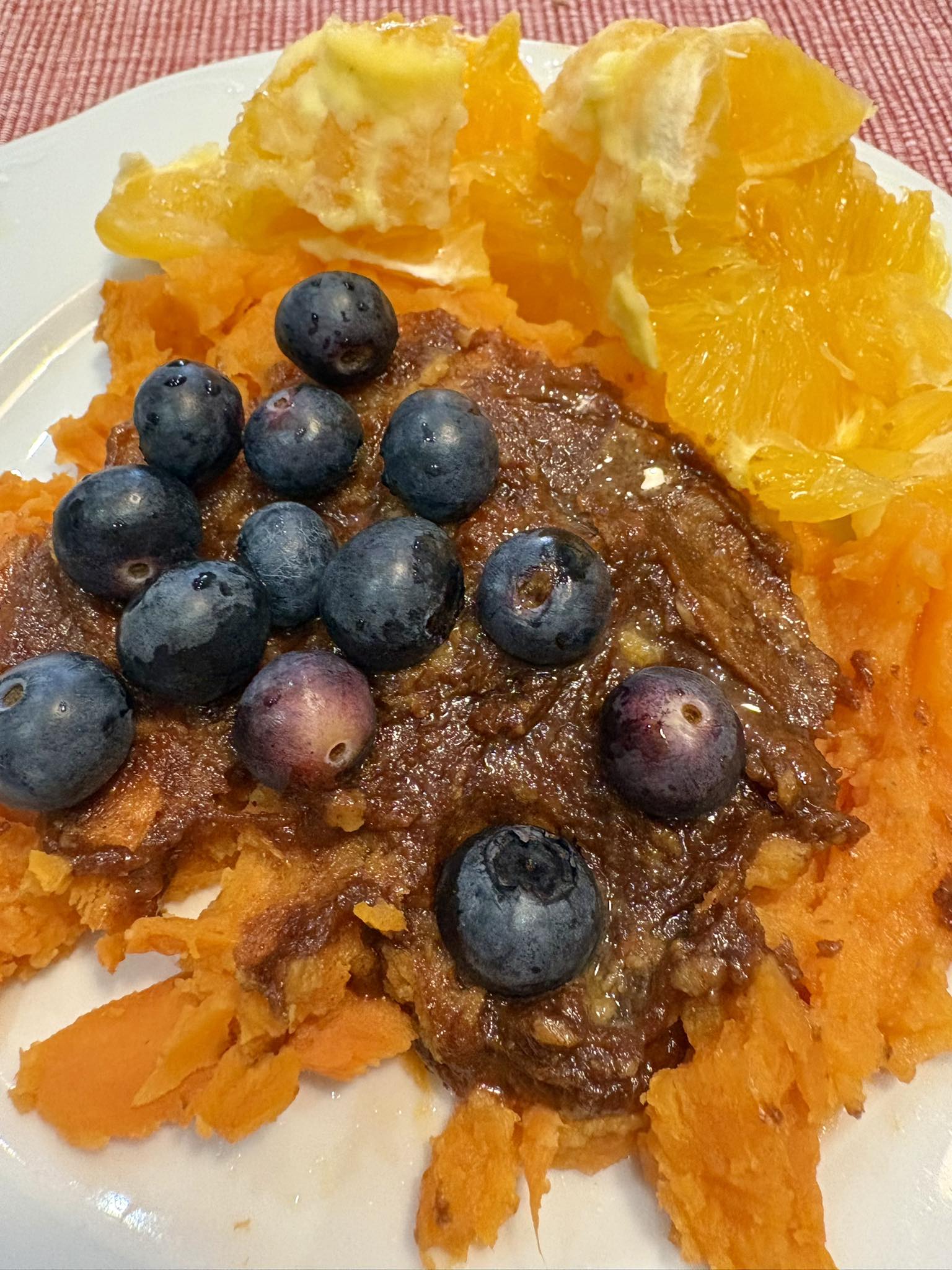
Many of us may have heard the advice of “eating the rainbow”. Let’s discover how this beautiful way of eating can help us optimize our wellbeing.
What does “eat the rainbow mean” and why is it important?
“Eat the rainbow” means eating fruits and vegetables of many different colors.
The idea is important because:
- the pigments that give these foods their bright color often reflects different phytochemicals and nutrients, like antioxidants and vitamins, and each group supports health in different ways. By eating all the colors of the nutrition rainbow, we harness the power of all these health promoting foods, resulting in a broader disease protection.
- varied plant compounds feed different gut bacteria, promoting a better gut microbiome. The gut microbiome plays a crucial role in immunity, modulating inflammation and even impacting our mood. Research shows that people who eat at least 30 different plants per week1 have higher gut microbiome diversity.
What does each color provide?
- Red: Lycopene.
- Reduces the risk for breast and prostate cancers and boosts heart, brain, eye, and bone health.2
- Examples: Tomatoes, strawberries, raspberries, watermelon, red peppers, guava.
- Orange: Beta-carotene.
- It is converted into vitamin A, which supports vision and immunity, fights cancer, reduces inflammation, supports the immune system, and boosts vision.3
- Examples: Carrots, sweet potatoes, pumpkin, mango, pineapple, cantaloupe, apricots.
- Yellow-orange: Vitamin C and flavonoids.
- Boost the immune system, reduce inflammation, inhibit tumor cell growth, and detoxify harmful substances.4
- Examples: lemons, papaya, peaches, oranges.
- Green: Calcium, folate, vitamin K, glucosinolates, indoles and lutein.
- Calcium strengthens the bones and muscles and boosts heart health.5 Furthermore, calcium from dark greens like kale or bok choy is usually better absorbed than calcium from dairy.
- Folate is essential for blood health and crucial for expecting mothers, for early brain and spine development of the baby, and to prevent neural tube defects (like spina bifida).
- Indoles and lutein eliminate excess estrogen and carcinogens and support eye health.6
- Examples: kale, collards, bok choy, zucchini, avocado, green beans, broccoli, Brussel sprouts, green cabbage.
- Blue: Anthocyanins.
- Destroy free radicals, reduce inflammation, and boost brain health.7
- Examples: blueberries, blackberries, figs, dark grapes, plums.
- Purple: Resveratrol.
- Boosts heart and brain health and may decrease estrogen production.8
- Examples: grapes, plums, purple cabbage, red onion, beets, eggplant.
- Brown: Fiber.
- Boosts digestion and insulin sensitivity by minimizing glucose spikes, and helps remove waste, like excess hormones and carcinogens.9
- Examples: whole grains, legumes, potatoes (with skin).
- White-beige: Indoles, allicin and quercetin.
- Boost our immune system and reduces chronic inflammation, and are cancer protective.
- Examples: onion, garlic, leek, shallot, cauliflower, mushrooms.
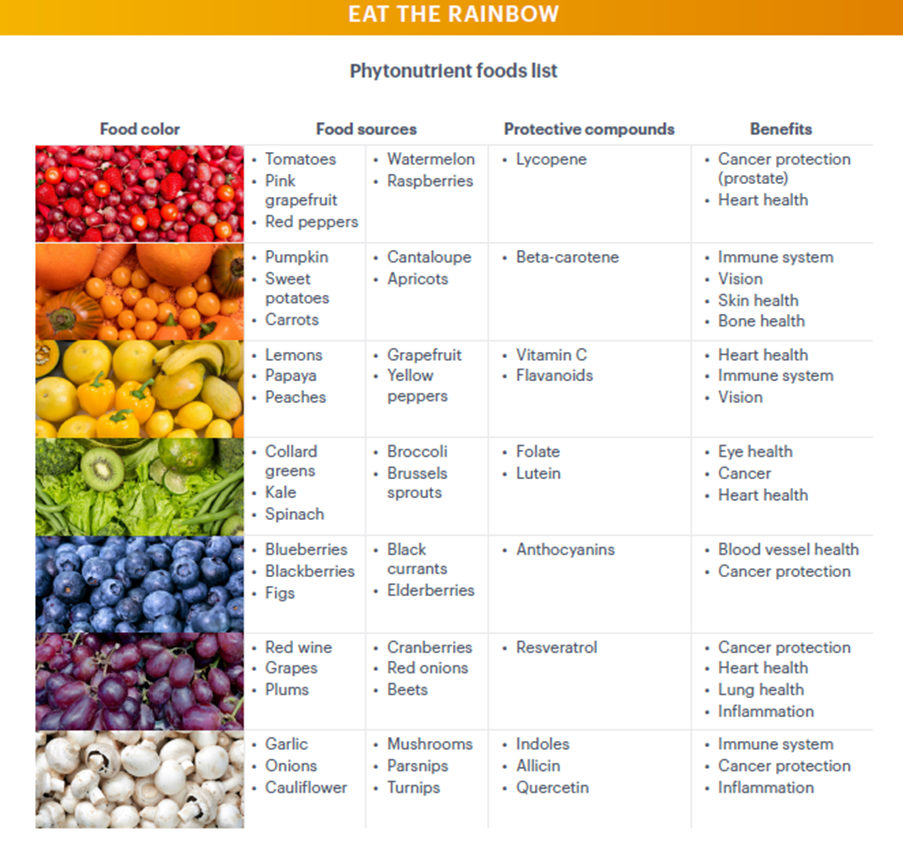
You can download this nice infographic from the Physicians Committee for Responsible Medicine website, and maybe keep it in a visible place in your kitchen.
Source: https://www.pcrm.org/news/blog/eat-rainbow
Nutrition made easy
Nutrition can be complicated. The simple rule of “eating the rainbow”, that is, incorporating as many colors in our plates as possible, is an easy visual way to increase variety without tracking nutrients or counting how many different veggies you are eating.
This month, I invite you to keep the rainbow chart handy and try to add one more color to each of the plates you eat. A sprinkle of herbs like parsley or oregano to a stew, a handful of cherry tomatoes to a grain bowl, berries to your oatmeal, mushrooms to your morning omelette, tangerine slices to your salad, lime or lemon juice to your curry… all counts!
References
- American Gut Project, https://microsetta.ucsd.edu/30-plants-per-week/
- National Library of Medicine. Lycopene. Last reviewed January 30, 2023. Accessed March 17, 2025. https://medlineplus.gov/druginfo/natural/554.html
- National Institutes of Health. Vitamin A and Carotenoids. Updated March 10, 2025. Accessed March 17, 2025. https://ods.od.nih.gov/factsheets/VitaminA-Consumer/
- National Institutes of Health. Vitamin C. Updated March 22, 2021. Accessed March 17, 2025. https://ods.od.nih.gov/factsheets/VitaminC-Consumer/
- National Institutes of Health. Calcium. Updated September 14, 2023. Accessed March 17, 2025. https://ods.od.nih.gov/factsheets/Calcium-Consumer/
- National Library of Medicine. Lutein. Last reviewed January 29, 2025. Accessed March 17, 2025. https://medlineplus.gov/druginfo/natural/754.html
- Krikorian R. Blueberry fruit supplementation in human cognitive aging. Abstract presented at: 251st National Meeting & Exposition of the American Chemical Society (ACS); March 13-17, 2016; San Diego, CA.
- National Library of Medicine. Resveratrol. Last reviewed January 30, 2025. Accessed March 17, 2025. https://medlineplus.gov/druginfo/natural/307.html
- National Library of Medicine. Fiber. Last reviewed July 23, 2024. Accessed March 17, 2025. https://medlineplus.gov/ency/article/002470.htm
 thrivebytheslice.com