
Note: this post has been updated to include the lastest advisory published by the U.S. Surgeon General on January, 3rd, 2025.
Staying on topic with my latest posts related to lifestyle changes for the New Year, today I would like to discuss a big one: reducing alcohol consumption. This is exactly the goal of the Dry January campaign: to promote healthier drinking habits by abstaining from alcohol for the month of January.
In my opinion, this is a big decision, because drinking alcohol is socially acceptable in most cultures, even encouraged in some contexts like celebrations or gatherings, and the damage that alcohol causes in our body (and mind) is rarely imminent; on the contrary, moderate alcohol consumption can make us feel good, relaxed, and connected with people. There are even some studies that show that moderate alcohol consumption can benefit our health. All this makes quitting, or reducing, alcohol consumption especially challenging. Why are we going to deny ourselves all these pleasant and “healthy” experiences?
The answer is simple: because alcohol does more harm than any potential good to our body and mind. And the supposed benefits can be equally achieved through other safer dietary approaches.
Dry January was developed by the charity Alcohol Change UK in 2013, with the goal to promote healthier drinking habits. The idea is simple: abstain from alcohol for the month of January. The challenge has grown in popularity over the last few years and nowadays millions of people take part worldwide. If you are considering reducing your alcohol consumption, you might want to check Dry January out.
Notice that Dry January is geared towards people who do not have an alcohol dependency issue. Those who think that they could have an alcohol consumption disorder must check with a doctor before signing up.
Not sure yet? Let’s go through a few FAQs to help make up your mind.
Is alcohol toxic for the body?
Yes. The bulk of alcohol metabolism takes place in the liver, where several enzymes help break apart the alcohol molecule. First, alcohol is converted into acetaldehyde, a highly toxic substance and known carcinogen. Acetaldehyde is further metabolized down to another, less active byproduct called acetate. Acetate is broken down into water and carbon dioxide for easy elimination.
Alcohol is also metabolized in other organs like the pancreas, brain and gastrointestinal tract, which are also exposed to acetaldehyde damaging effects.
The body cannot store alcohol and needs to get rid of it. The duration of alcohol metabolism depends on the drink (volume and strength), the individual features (gender, age, body weight, race) and even the context (taken with food or alone, time of the day, exercise, drug interactions). It can take up to 25 hours for the body to completely clear all the alcohol.
What does alcohol do to the body?
Besides the liver, alcohol can damage our brain, pancreas and cardiovascular system. It impairs our immune system and promotes multiple types of cancer, especially GI and breast cancer.
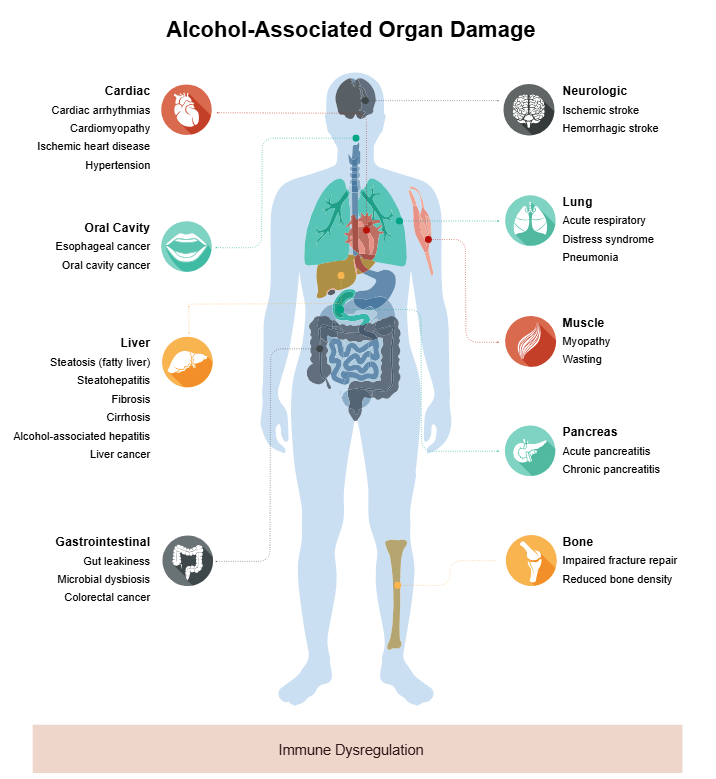
Source: https://www.niaaa.nih.gov/alcohols-effects-health/alcohols-effects-body
Wine is healthy because it has polyphenols, right?
Wrong!
It is true that wine, especially red wine, does have polyphenols (antioxidants), that it gets from the skin of the grapes in traditionally produced wines. However, you still have to expose yourself to the toxic byproducts of alcohol metabolism to access the polyphenols. Many other alcohol-free foods do contain polyphenols as well, for example berries, dark chocolate, nuts, flaxseeds, coffee and tea… and, guess what, fresh grapes (if you eat the skins). Without a doubt, these other foods are a better way to get a polyphenol dose.
Does alcohol have any benefits at all?
Potentially, but it is not related with what you ingest, but with how you do it.
Alcohol is usually consumed in companion and can foster positive interpersonal relations and community building. And this is really good for your health. Actually, the Blue Zones project found that communities with the longest health span do consume alcohol in moderation regularly. However, it is unclear the impact of alcohol on longevity, if it was because of the supposed health benefits (polyphenols) or the interpersonal bonds forged around a glass of wine. Probably the latest.
If you drink alone, you might think that you still get some mental benefit because alcohol helps you relax. Nevertheless, like with the polyphenols, there are safer ways to tap into relaxation, for example: meditation, yoga, reading a book, going for a walk, exercising or talking to a loved one.
Should I quit alcohol?
Ideally yes, especially if you are at higher risk because of some of the possible health consequences.
According to the World Health Organization (WHO):
“We cannot talk about a so-called safe level of alcohol use. It doesn’t matter how much you drink – the risk to the drinker’s health starts from the first drop of any alcoholic beverage. The only thing that we can say for sure is that the more you drink, the more harmful it is – or, in other words, the less you drink, the safer it is.” Dr Carina Ferreira-Borges
Furthermore, a new study published by the U.S. Surgeon General office on January 3rd of 2025 confirms that alcohol consumption is the third leading preventable cause of cancer. To raise awareness, they are requesting to update the existing Surgeon General’s health warning label on alcohol-containing beverages to include a warning about the risk of cancer associated with alcohol consumption, similarly to the warnings we see in tobacco packets.
If you still plan to consume alcohol, my suggestion is to limit it to special occasions, like celebrations or your weekly Saturday night dinner out, and stay within the current guidelines for moderate consumption: 1 serving per day for women and 2 servings per day for men. 1 serving of wine is 5 fluid oz (150 ml). These guidelines may change soon though: the U.S. Surgeon General office is requesting to reassess these recommended limits for alcohol consumption to account for the latest evidence on alcohol consumption and cancer risk.
Preferably, stick to red wine, for the possible health benefits. White wine is the second choice and beer third choice, as they also have some potential health benefits. Try to avoid spirits, particularly cocktails and mixes with high sugar ingredients like sodas or syrup.
However, the WHO also warns that by focalizing on these possible health benefits, we are missing the big picture – and they are on board with adding the warnings to the labels.
So, when we talk about possible so-called safer levels of alcohol consumption or about its protective effects, we are ignoring the bigger picture of alcohol harm in our Region and the world. Although it is well established that alcohol can cause cancer, this fact is still not widely known to the public in most countries. We need cancer-related health information messages on labels of alcoholic beverages, following the example of tobacco products; we need empowered and trained health professionals who would feel comfortable to inform their patients about alcohol and cancer risk; and we need overall wide awareness of this topic in countries and communities”- Dr Ferreira-Borges.
I hope this helps you make an informed decission regarding alcohol consumption, weighting pros and cons, what you enjoy about alcohol vs. known risks.
Any drink suggestion instead of alcohol – especially when I’m socializing?
Plenty!
- Still or sparkling water, perhaps flavored with slices of fruits and veggies like lemon or cucumber.
- Coconut water.
- Zero alcohol beer, like Bud Zero.
- Kombucha, the real one with little added sugar. I recommend Synergy by GT. Bonus, this is a fermented beverage, good for your gut. Notice that it can cause discomfort to sensitive stomachs due to the high gas content and acidity.
- Natural fruit juice, like tomato, pomegranate or grapefruit.
- Light fruit smoothies, like watermelon with coconut water and mint.
- Fortified, low sugar-added juice, like calcium fortified orange juice.
- Functional drinks, for example Uncle Matt’s (I like the Ultimate Immune one).
- Mocktails with low sugar content.
In conclusion
The start of the new year is the perfect time to reevaluate our alcohol consumption habits. If you think you could benefit from reducing your intake, the Dry January initiative can be of great help, not only because of the free resources, but also the feeling of being part of a community tackling the same goal. Sign up here: https://alcoholchange.org.uk/help-and-support/managing-your-drinking/dry-january#apps
Alcohol does no good to our bodies and in the full picture, the health risks outweigh the potential benefits. Many other alcohol-free foods and drinks like berries, chocolate or tea provide similar benefits, without the downsides.
If you decide to continue drinking alcohol, I suggest you stick to the current guidelines for moderate consumption (1x 5 fl oz / 125 ml serving for woman, 2x 5 fl oz / 125 ml servings for men ) and save it for special occasions.


One thought on “Dry January: A Fresh Start to Healthier Drinking”