

I have yet to meet somebody who doesn’t like chocolate. I personally love it, a little too much I would even say! And this is OK, because unlike most other treats, chocolate can be good for you – if you choose the right type, and control your portions. My goal with this guide is to help you with this, by analyzing the different types of chocolate from a nutritional point of view.
Ready to make chocolate work for us, not against us?
The nice side of chocolate
Chocolate is made from cacao beans, harvested from pods that grow on cacao trees. Cacao beans are roasted and mixed with other ingredients, like sugar, milk or nuts. Cacao beans are therefore a plant product, but finished chocolate may include animal products, or even man-made products in some elaborated varieties like fancy truffles.
The very first step to make chocolate work for us is to check the label, to be aware of the additional ingredients that can boost, or hinder, chocolate health properties. We want the first ingredient to always be cocoa related, like cocoa solids. This is because cacao is the reason why chocolate can be good for us. Cacao provides chocolate with protective antioxidant, fiber and caffeine content:
- Cocoa is high in polyphenols, powerful antioxidants that neutralize harmful free radicals. Free radicals are a byproduct from our own metabolic functions, and they also exist in our environment, for example in pollution or chemical products. Our bodies have the capacity to fight these substances, but it is limited. The more antioxidants we get, the more free radicals we can beat. Antioxidants are sourced mostly from food, like berries or good quality chocolate. Chocolate polyphenols protect our cells from oxidative damage and inflammation, and lower the risk of chronic conditions like cancer or diabetes.
- Fiber is essential for our digestive system health, and to feed our microbiome. A healthy microbiome also fights inflammation and improves our immunity, protecting us against chronic diseases.
- Caffeine is a stimulant that can boost the physical and mental performance of most healthy people. It has to be taken in moderation though – too much caffeine can cause a myriad of issues, from restlessness to being fatal. The amount of caffeine in chocolate depends on multiple factors, including the amount of cocoa. Darker chocolates have more caffeine and other varieties. In any case, chocolate caffeine content is moderate and significant lower than coffee, and rarely poses a concern.
The naughty side of chocolate
Cocoa itself contains a significant amount of fat, which unfortunately happens to be saturated fat. Scientific studies have demonstrated that saturated fat is detrimental to our cardiovascular health.
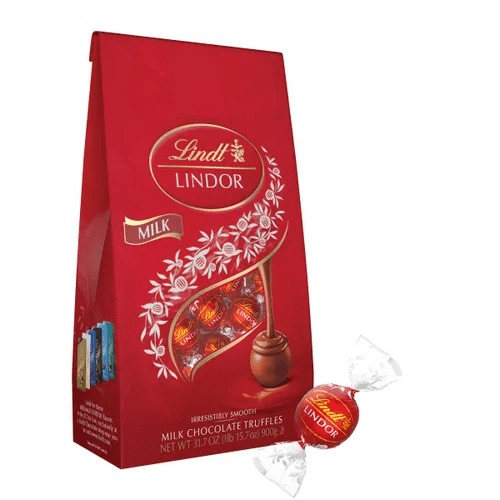
Some chocolate variants even include added unhealthy fats, like coconut or palm. For example, Lindt Milk Chocolate LINDOR Truffles. Which are delicious but obviously not the best option to make chocolate work for us, given the saturated fat, added sugar and calorie content:

Given this, one might think: then, the best chocolate it’s the purest one, with the highest cacao content? Like 85% or higher?
Well, yes and no:
- Yes, because we are going to get the highest amount of polyphenols and fiber.
- No, because we are going to get a tremendous amount of saturated fat and calories
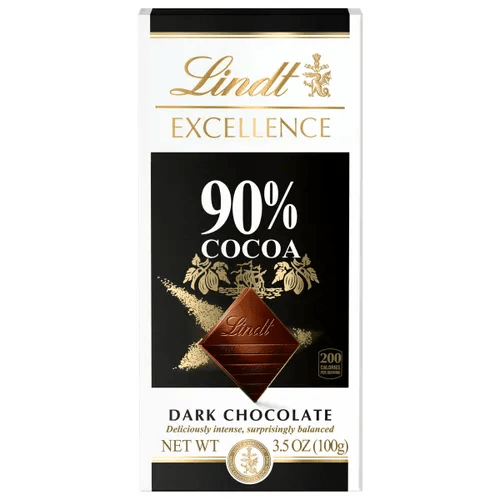
For example, have a look at this Lindt 90% cocoa chocolate bar nutritional value: a serving provides 50% of daily saturated fat RDA, and a good amount of calories consequently (fat is the most calorie dense macronutrient):
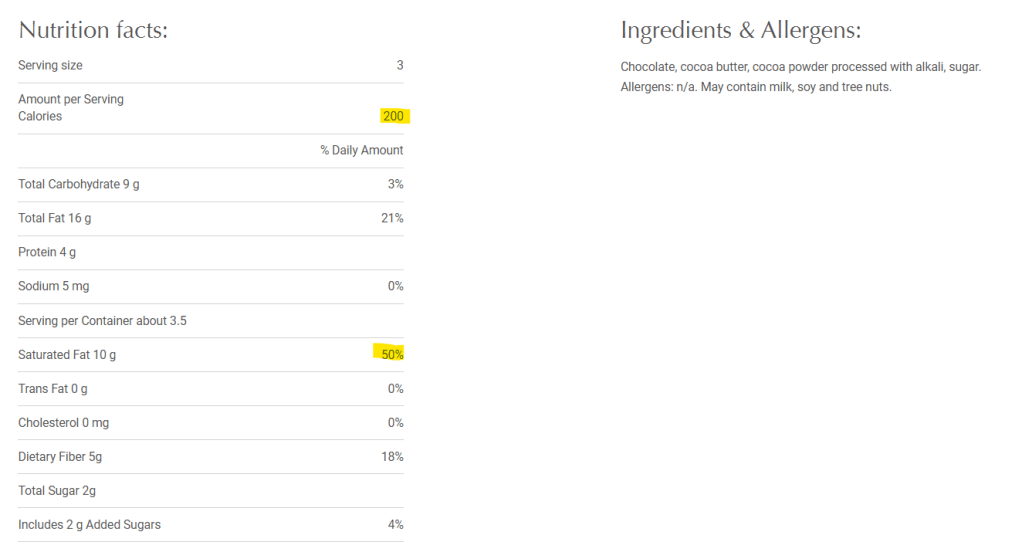
What we want instead is a balance between pure cocoa and a few added natural ingredients to reduce the amount of saturated fat and calories. This also makes chocolate more accessible to those who prefer a flavor that is a little less bitter.
And the winner is…
Dark chocolate bar with 70% cacao content.
I personally find 70% to be the right balance: less fat, some added sugar but not concerning in the framework of a healthy diet, and lower calories per serving. Flavor is balanced as well – not too sweet, not too bitter.

And if you ask me about my absolute favorite, from flavor and nutrition perspectives, that is Ghirardelli’s 72% dark chocolate bar:

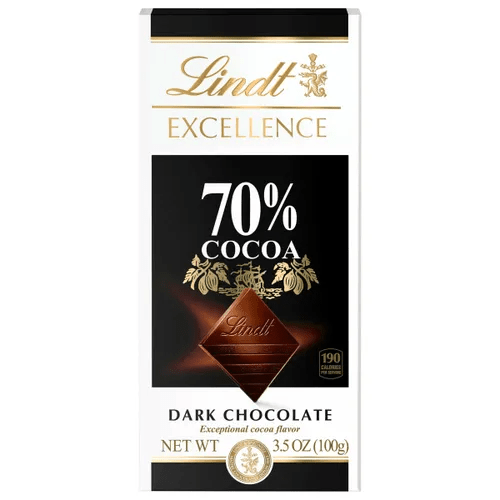
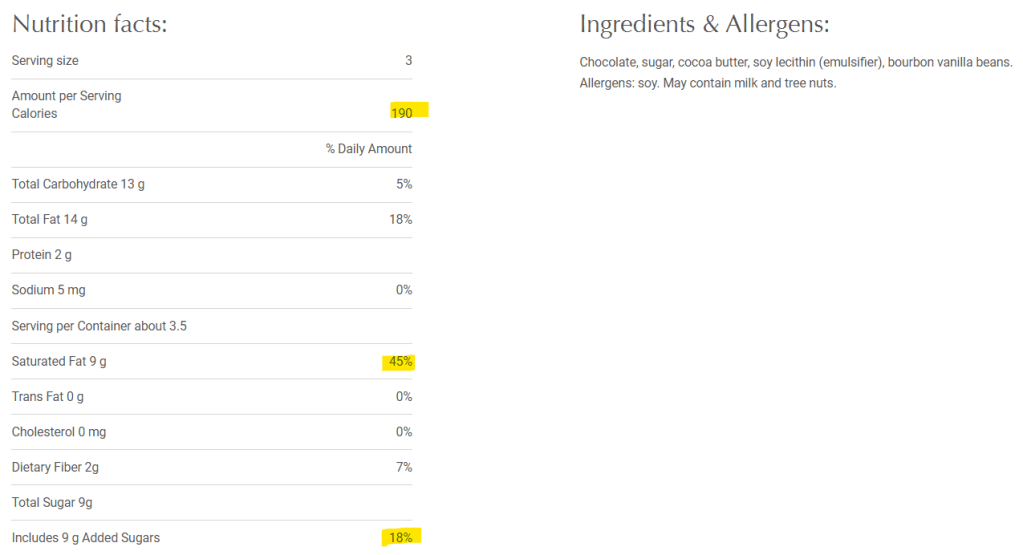
A winner, compared to for example Lindt 70% cocoa chocolate bar, that provides a whooping 45% RDA saturated fat and 18% RDA added sugars per serving (30g, to be fair, a little bigger than 25g Lindt):
A note about “sugar free” chocolate
Sugar free chocolate uses sweeteners instead of sugar. The evidence is not conclusive yet when it comes to the long term effect of sweeteners on our health, but there’s something we know: they disrupt the gut microbiome. For this reason, I do not recommend consuming sugar free chocolate. Lower in sugar alternatives and smaller portions might be better choices to control added sugar intake.
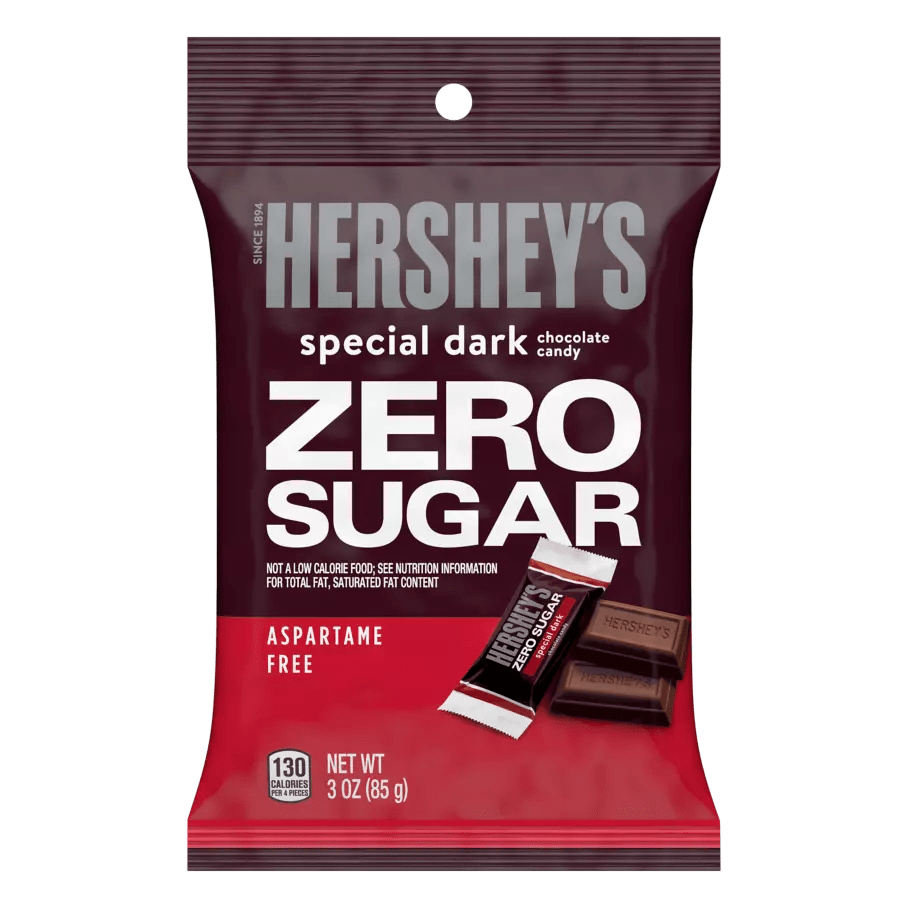
And besides the lack of added sugar, the ingredient list and nutritional value of sugar free chocolate do not look much healthier than the options with sugar. I don’t even know what PGPR is!

Conclusion
Chocolate, like any other treat, has a place in the framework of a healthy diet. For the most benefits, and the least downsides, I recommend consuming pure chocolate bars with about 70% cocoa content. This provide a good balance among saturated fat, fiber, sugar and calories.
It is important to pay attention to serving sizes. I personally find the package suggested sizes too generous most of the time. Feel free to eat a smaller portion, specially if you would like to control sugar, fat and calories.
If you consume chocolate regularly, like I do, this month I invite you to:
- check the label before you purchase a specific chocolate type; pay special attention to saturated fat and added sugar content
- consider choosing chocolate bars, not candy, with about 70% cocoa content.
Now you are ready to make chocolate work for you! And remember that treating yourself occasionally with something different is more than OK.
Be well,
Isabel
Note: this article reflects only my professional and unbiased opinion. I do not have any affiliation with any of the mentioned brands.
 thrivebytheslice.com