

Sleep is an interesting topic. While dedicating enough time to sleep each day is still considered a privilege by some, even a waste of time by others, science nowadays confirms that sleep quality and quantity are crucial for our health and wellbeing. Far from being time lost in a state of unconsciousness, a good night of sleep helps us make the most of our awake time. In an always-on, 24 x 7 world, sleep is more important than ever.
Sleep benefits for health
While we sleep, important processes take place:
- body tissues are repaired
- hormones are released
- memory is consolidated
- toxins and waste products are flushed out of the brain.
When these processes are not completed properly, several health issues can develop:
- Cardiovascular disease: our cardiovascular tissues are repaired during sleep, including our heart and blood vessels.
- Mental issues: lack of sleep has been linked to depression, anxiety and other mental disorders. Sleep is crucial for stress management, which typically underlies any of these disorders, and it contributes to cardiovascular disease too.
- Cognitive decline: recent studies show that the brain waste removal process via the so-called glymphatic system is critical to get rid of toxic byproducts like beta-amyloid. These toxins have been linked to brain diseases, including Alzheimer, therefore we want our cleaning system to work properly while we sleep. Lifestyle habits that improve the removal system are omega-3 fatty acids consumption, intermittent fasting, sleeping on your right side, exercise and stress management.
- Diabetes: sleep deficiency can result in higher-than-normal blood sugar levels. Furthermore, our bodies naturally crave sugary foods when we don’t get good sleep, as they provide a quick (but brief) boost of energy.
- Obesity: lack of sleep disrupts hormones controlling hunger and satiety, which can lead to weight gain. And sugary food craving won’t help either.
- Cancer: melatonin, the hormone that regulates the human body’s sleep cycle, is believed to protect from cancer due to its tumor-suppressing capabilities.
- Safety hazards: as a result of tiredness and lack of concentration.
- Quality of life: mood and productivity are improved with sleep.
How much sleep is needed?
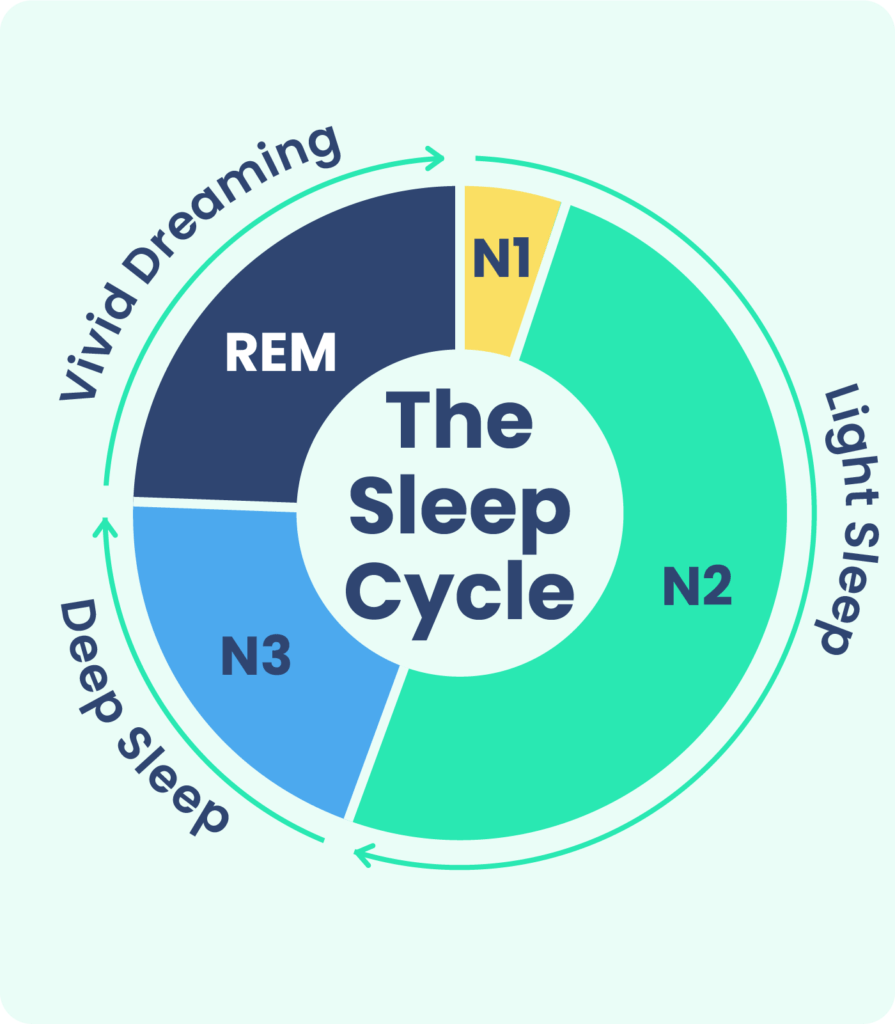
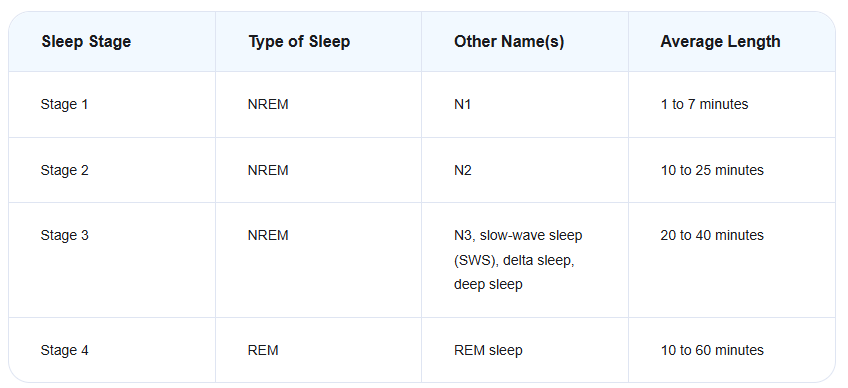
During sleep, our brain goes through four different phases, or stages, of different duration:
- The first and second stages are light sleep and can be considered preparation: our brain progressively transitions from normal awake activity to sleep, and to different electrical wave patterns.
- The third stage is deep sleep, and this is when most of the critical processes take place.
- The fourth and last stage is REM (Rapid Eye Movement) sleep, when the brain activity increases again close to an awake state, and we have our most vivid dreams.
Each of these stages has a typical duration range, which varies with each individual. On average, the full 4-stage cycle takes about 90 minutes, and we go through it multiple times per night. Some cycles are longer than others, typically the first ones are shorter than the later ones.
The total amount of sleep is something highly personal, and it’s going to depend on your personal staging. Those who go through longer deep sleep stages may need fewer total number of cycles and therefore may need fewer total hours of sleep.
For adults, current recommendation is between 7-9 hours daily, even 6-9 per some sources. If you sleep 6 hours and wake up rested, then 6 hours may be right for you.
Ten easy tips to improve your sleep
These are my top ten. Personally, I strive to practice all of them.
- Maintain a regular schedule. Try to go to bed and wake up every day at the same time. Our bodies thrive on a routine. The best way to do this is to go in reverse: define what time you need to get up, and then go to bed at least 7 hours early.
- Have a bedtime routine. Things like reading a book, drinking a relaxing herbal tea, journaling, listening to calm music, meditating, etc. Our routine can be specially helpful when we cannot follow our regular schedule, because being realistic, this will happen. A night out with friends, a long trip or a tight deadline may push our bed time out. That’s OK! Our routine will signal our brain when is time to wind down.
- Expose yourself to bright, natural light in the morning. Ideally, as soon as you wake up. A walk or some outdoor exercise will do wonders to wake us up and regulate our wake-sleep cycle. The natural lights help us with melatonin production later in the day, as the sun goes down. Melatonin is necessary to induce sleep.
- Dim your lights later in the day. Our bodies need bright light in the morning, but for the same reason, a softer light is preferred in the evening, and preferably warm, like the sunset hues. This will signal our body to start winding down. Bright lights in the evening can disrupt our biological rhythms and interfere with our sleep.
- Do some exercise. Vigorous exercise is best practiced earlier in the day, as it can be too stimulating in the evening. Milder exercise, like a walk or yoga, are preferred options in the evening.
- Be mindful of your eating. Some foods interfere with sleep, like caffeine or some spices, whereas others promote it, like those high in tryptophan. Also, you don’t want to go to bed with an overfull stomach, but not hungry either. So, plan and time your meals properly. Ideally, you want to have dinner at least 2 hours before bed. It is best to avoid hard to digest foods and fats at night, and prioritize complex carbohydrates. Carbs can stimulate serotonin production, a hormone that helps us relax and is a precursor to melatonin.
- Create a sleep promoting environment. That is, a place that is cool, dark and quiet. You may want to consider getting blackout curtains. For noise, earplugs are great, specially if your partner snores or you live in a busy place, or share it with someone with different schedules. Alternatively, you may consider getting a white noise machine.
- Manage stress. If something is concerning you, or you have a long to do list for the next day, try to write it down on a piece of paper before you get into bed. This will give you enough piece of mind to relax, and you can rest assured you won’t forget anything. You can also incorporate meditation, yoga, stretching or journaling as part of your bedtime routine.
- Avoid stimulating things like news, action films, loud sounds, etc. just before bed. We want to signal our body that it’s time to wind down.
- Sleep mind-body practices: there are meditation or yoga sessions specially designed for sleep. Typically, they start by rotating the consciousness through different parts of the body, and then they might include visualizations and breathing exercises. You can find them in apps like Downdog or Headspace, or Youtube. Another possibility is to practice Yoga Nidra. Downdog offers this modality, even with a sleep boost (goal is to fall sleep).
Your action plan
Sleep is a vital need, not a privilege. While we sleep, body tissues are repaired, hormones are released, memory is consolidated, and waste products are flushed out. Getting enough sleep is paramount to function optimally during the day and reduce our risk of chronic diseases.
If you struggle with sleep, I invite you to pick 1 to 3 of my tips and set a SMART goal about it, so you can start improving your sleep right away. For example:
- For tip #1: I will go to be at 11 pm and wake up at 7 am for the next two weeks.
- For tip #3: I will go for a 15 minute walk every day after breakfast, during the month of June.
- For tip #7: I will install blackout curtains in my bedroom in the next 7 days.
Alternatively, you can work with a Health and Wellness Coach, who can support you in your sleep improvement journey.
I hope this article was helpful.
Sweet dreams,
Isabel
 thrivebytheslice.com