
The month of February is associated with love, as of Saint Valentine, the patron of lovers, is commemorated on the 14th. And love is symbolically associated with the heart.
But there’s another important thing to consider in February as well: your cardiovascular health, that is, the health of your heart, your blood vessels, and the circulatory system in general. Heart disease is the leading cause of death not only in the USA, but also worldwide. It is important to raise awareness about this topic for our own safety and the safety of our loved ones (no pun intended). For this reason, February is also designated the American Heart Month, with the goal of raising awareness about this disease.
There are multiple risk factors that influence our chances of suffering from cardiovascular disease. Some of these factors are not modifiable, like sex or gender. The good news is that there are many other risk factors that we can indeed change, at least partially, through lifestyle and medication.
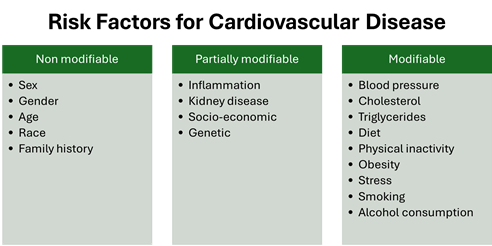
In this article and the next one, I am going to elaborate on how lifestyle adjustments can reduce our risk factors for cardiovascular disease.
Know your risk
But first, let’s set a baseline. Awareness starts with knowing your risk level. The American Heart Association provides a free online tool, PREVENT, that evaluates your individual risk. You will enter some data (you may have your latest physical exam results handy for this) and it will calculate the probability of getting heart disease in the next few years. The tool is available here: https://professional.heart.org/en/guidelines-and-statements/prevent-calculator
If you use the calculator and your risk is low, congratulations! Keep doing what you are doing, and maybe tweak here and there where there’s room for it.
Results not as nice? Then take it as a wake up call to start implementing lifestyle changes. And please discuss any changes with your health provider.
Lifestyle factors of cardiovascular disease
No surprises here, these are the usual suspects:
- Diet
- Exercise
- Tobacco
- Stress
- Sleep
Diet
The eating patterns that have the most research and support a healthy heart are the Mediterranean diet, the DASH diet (Dietary Approach to Stop Hypertension), and plant-based diets. Keep in mind though, that this is not a blanket statement and that specific health conditions like gluten intolerance can make these diets less optimal for an individual. Again, please check with your health provider.
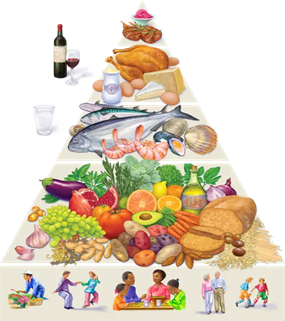
The Mediterranean diet, as the name implies, is inspired by traditional eating patterns of countries bordering the Mediterranean Sea. It emphasizes fruits, vegetables, whole grains, legumes, fish and olive oil, and includes moderate amounts of poultry, dairy, and eggs. It also encourages regular physical activity and social interaction, as well as optional moderate wine consumption. Red meat and sweets are limited. The cardio-protective features of this diet have been proved throughout, specially comparing to other Western diets like the Standard American Diet.
The following diagram represents the Mediterranean eating pattern:
Source: https://oldwayspt.org/explore-heritage-diets/mediterranean-diet/
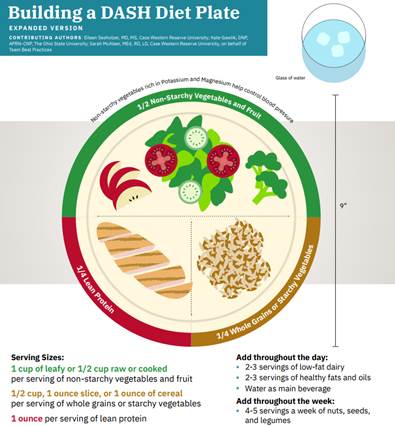
The DASH diet was developed by the National Heart, Lung, and Blood Institute (NHLBI) in the United States, aiming to lower high blood pressure (hypertension) and improve overall cardiovascular health. It prioritizes the consumption of whole foods such as fruits, vegetables, whole grains, lean proteins, and low-fat dairy, with preference for potassium, calcium, magnesium rich foods, due to its positive impact on blood pressure regulation. It limits the intake of saturated fats and added sugars, and specially sodium, which should not exceed 2,300 mg daily, or 1,500 mg for higher-risk individuals. Numerous studies have shown its effectiveness, especially for blood pressure management.
The following picture explains how eat accordingly to the DASH diet:
Source: https://www.cardi-oh.org/resources/building-a-dash-diet-plate-expanded
Plant-based diets encompass multiple modalities, ranging from flexatarian, which includes animal products in smaller amounts, to vegan, which excludes all animal derived products.
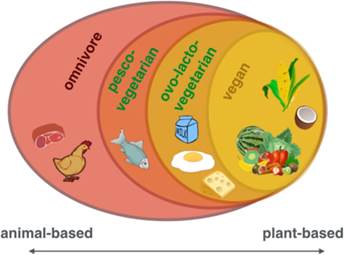
Source: https://www.nature.com/articles/s41398-019-0552-0
Regardless of the specific variation, all whole foods plant-based diets focus on consuming minimally processed plant foods, like fruits, vegetables, whole grains, legumes, nuts, and seeds. When well planned, they have been proved to effectively reduce the risk of heart disease, certain cancers, obesity, and Type 2 diabetes. Some studies, like the China Study, point out that low fat plant based diets offer the highest cardiovascular benefits, even higher than the Mediterranean diet.
What do all these diets have in common?
They are high in fruits, vegetables, legumes, grains, and low in animal products. The DASH diet limits the intake of sodium, and the Mediterranean also promotes the regular consumption of fish and olive oil and lifestyle factors like physical exercise and social interactions.
A note about fish and olive oil
Without a question, olive oil is superior to any other animal fat like butter and most vegetable oils, due to its lower content in saturated fat, and higher content in antioxidants and omega 3 fatty acids, which beat chronic inflammation. Likewise, fish is superior to meat, especially red meat for similar reasons.
However, both olive oil and fish still have saturated fats and they are extremely high in calories, and even if they provide some specific key nutrients like Omega 3s, its nutritional value is quite limited without protein, fiber or anything other than fat, and as a result the nutritional density is low (nutrients per calories). Check by yourself, these are the nutritional labels of both salmon (left) and olive oil (right).
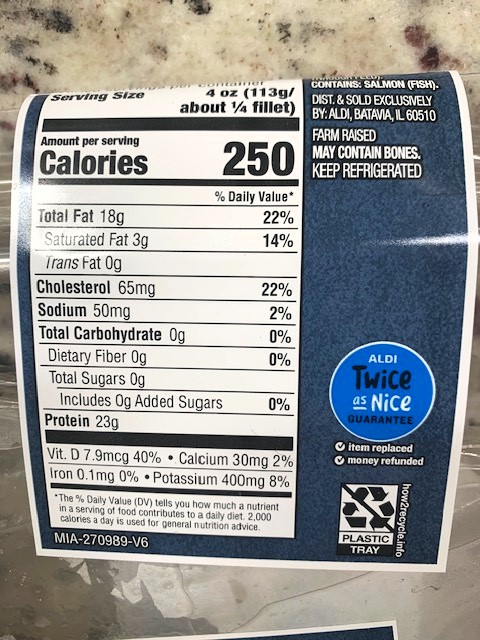
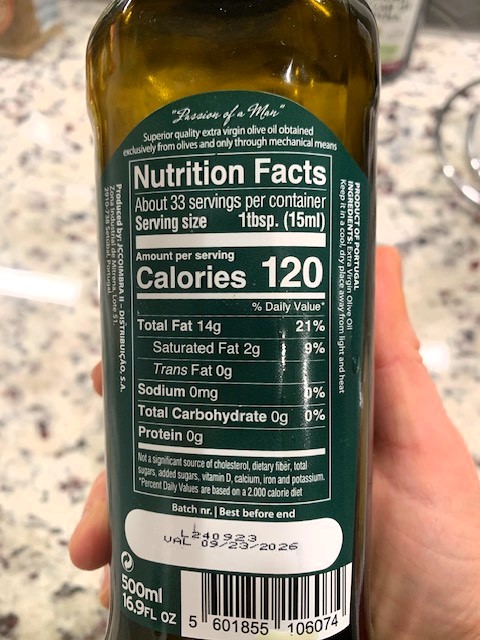
For this reason, I do not consider either fish or olive oil “free” health foods. They still need to be consumed in moderation. A good guideline to take advantage of the benefits without tapping into the downsides is to eat fish 2-3 times a week, and 1-2 tablespoons of olive oil per day.
For those dealing with obesity or hyperlipidemia, it may be best to cut both oil and especially fatty fish further. Cooking without oil is possible and it is something I’ve been doing lately, and I have been surprised with how food turns out. The book “21-day Weight Loss Kickstart” from Dr. Neil Banard provides excellent tips about how to cook without added oils.
Oils, in the end, are processed foods, even so slightly like Extra Virgin Olive oil. Olives still need to be crushed and expelled, and in the processes, deprived of fiber and other beneficial nutrients. My choice is to use oils very sparingly, including olive oil, and use fats in their whole form: nuts, seeds or avocados. The whole form keeps the fiber at least.
Studies like The China Study and Forks Over Knifes corroborate that cutting the added oils out of our diets, including the so-called healthy ones like olive oil or avocado oil, is more beneficial for our health than consuming those oils.
And how about Keto diet?
The keto diet is still considered a limited evidence diet, as the only verified use is to treat epilepsy in children. Keto tricks the body in a starvation state, so the body needs to resort to ketosis for energy, since no glucose is available. This helps reduce blood sugar and lose weight, which are risk factors, but in most people it raises cholesterol at dangerous levels, so in general it is not recommended for cardiovascular health. If you think it can benefit you, always try it under medical supervision.
To be continued
Stay tuned for part 2, where I will discuss the other 4 lifestyle factors for cardio vascular health. In the meantime, I invite you to identify strategies from the Mediterranean, DASH or Plant-based diets that you could easily incorporate in your current eating patters. For example:
- making eating a social event
- eating an animal-free meal a day
- reducing the consumption of ultra processed foods with high sodium content (i.e. 300 mg or 20% per serving).
Be well,
Isabel
 thrivebytheslice.com
One thought on “Lifestyle for Better Heart Health (part 1: diet)”