
Superfoods… most of us have heard this word, and probably foods like kale or chia seeds come to mind. Superfoods are supposed to have kind of magical powers for our health, due to their extremely high nutrient density, and also to the presence of other compounds like antioxidants and fiber.
Even in my Nutritionist Certification test I got a question about superfoods. And honestly, I didn’t know what to answer. Because even if I personally think there’s no such thing as a “superfood”, I do think that the specific one they were asking about could deserve the qualification. After a short internal debate, I answered yes. But I don’t know if that was the right answer. No single food is a superfood because we need variety in our diet for optimal nutrition.
Clarified this, with this article I’m starting a series were I will discuss a variety of extremely benefitial foods (or “superfoods”) and why, in my opinion, they made it into this category. We will be talking about nutritional dense foods, whose benefits go beyond their macro and micro nutrient composition. All of them are functional foods loaded with nutraceuticals, like the mentioned antioxidants or fiber.
And the first one is… drum roll please… oats!!
What is “oats”?
The oat is a species of cereal grain grown for its seed, which is commonly known by oats. Humans consume oats as oatmeal. The raw oat can be cut, hulled and slightly processed in different ways, resulting in a variety of oats that range from the least processed, or groats, to instant oatmeal, or even oat bran. Each variety has its benefits and downsides, and they are all excellent.
The benefits of oat consumption
Multiple studies have demonstrated the numerous health benefits of oats, the most significant one being cardiovascular health promotion thanks to its ability to lower LDL cholesterol and limit plaque formation through multiple mechanisms. Other remarkable benefits include regulating blood sugar and helping maintain a healthy body weight.
What makes oats a superfood?
Oats are rich in fiber, protein and complex carbohydrates, and low in fat. But what is unique about oats is their content in a type of soluble fiber called beta-glucan.
Beta-glucans cannot be broken apart by the digestive system. Furthermore, when they arrive to our intestine, thy act like a sponge, binding to other substances and being finally excreted. You can think of beta-glucans like an intestinal cleaning system, if that makes sense.
Oats also contain many antioxidants and an unusual, but protective, amino acid profile.
Oats and health
Oats keeps us healthy acting on multiple fronts:
- Beta-glucans bind with intestinal bile acids, which are then excreted and not re-absorbed by the body. Bile acids are produced from cholesterol in the liver. If those bile acids are not reabsorbed and sent back, the liver needs to generate new bile acids, using blood cholesterol. As a result, the LDL cholesterol levels drop. This is exactly how prescription cholesterol-lowering drugs called bile acid sequestrants (like Questran) work.
- The viscosity of the beta-glucan bulk increases the water barrier that sits next to the cells that line the intestine. This makes it harder for cholesterol to be reabsorbed, thus being excreted instead, and again resulting in the liver having to use blood cholesterol to replenish the stock that it didn’t get from intestinal absorption.
- Beta-glucans slow down the glucose absorption into the blood, and as a consequence, less insulin needs to be segregated to bring blood sugar levels back to normal levels. Insulin promotes the production on cholesterol in the liver, therefore less insulin means less cholesterol produced.
- Beta-glucans are fermented in the large-intestine generating short-chain fatty acids. One of this fatty acids, propionate, interferes with the main enzyme involved in cholesterol production (HMG-CoA Reductase). Cholesterol lowering statin drugs use this same mechanism to limit cholesterol production.
- The LDL cholesterol circulating in the blood is not necessarily dangerous, unless it deposits on the vascular walls and starts oxidizing, triggering plaque formation (atherosclerosis). Oat antioxidants fight the oxidation of LDL cholesterol, consequently reducing the risk of atherosclerosis.
- Oats are high in the amino acid arginine. Arginine is precursor or nitric oxide, a blood relaxant that promotes lower blood pressure. Arginine also decreases platelet stickiness, reducing the blood ability to clot.
- Oats are high in protein and fiber, increasing satiety, regulating appetite and as a result, promoting a stable and healthy body weight.
Your oats prescription
The FDA recommends to consume 3 grams of beta-glucan daily to lower LDL cholesterol. 1/2 cup of old-fashion, rolled oats has 2 grams. Instant varieties usually have less, about 1 gram per packet. 1/2 cup of oat bran has 3 grams.
How to incorporate oats in your diet
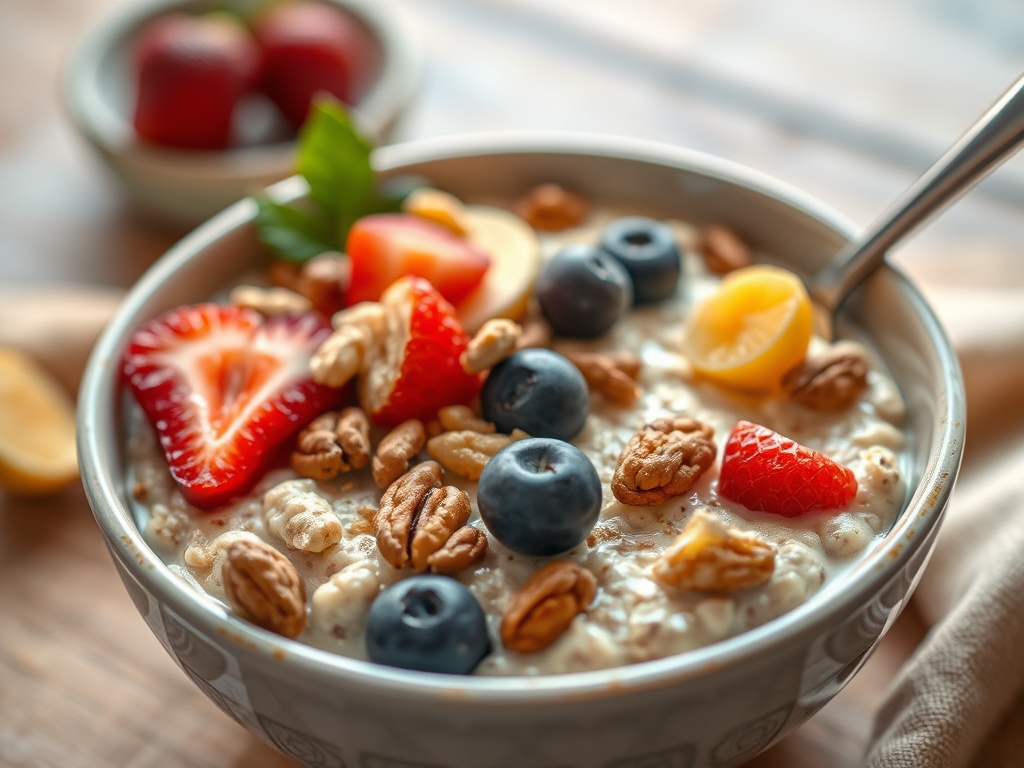
The most straightforward way is to eat oatmeal for breakfast. I personally love a warm bowl of oats in cooler months! You can either opt for overnight oats or cook them just before eating, traditionally on the stove or quickly in the microwave. Check out my recipe below!
Oats can also used as binders in baking, and instead of bread crumbs in meatballs, burgers and alike.
Quick breakfast oatmeal recipe
Makes 1 serving:
- Combine 1/2 cup rolled oats, 1 tablespoon or chia or flax seeds, and 1 cup of milk (plant based or cow) in a bowl. If using a plant-based milk, I recommend plain unsweetened soy milk to increase the protein content and satiety. Unsweetened vanilla is also a good option.
- Cook in the microwave for about 1 minute. Let sit for a few minutes (5-ish) until it thickens a little.
- Add your preferred toppings like banana, blueberries, apple or other fruits; dates, raisins, prunes or other dried fruits; walnuts, almonds or other nuts; cinnamon, pumpkin pie, or other spices; optionally sweeten with a few drops of maple syrup, honey, agave, vanilla extract, o even a dash of coconut sugar.
- Enjoy!
In conclusion
Oats are an inexpensive and versatile addition to our diets. Its unique make up of fiber (including beta-glucans), antioxidants and amino acids helps regulate cholesterol levels, blood glucose and body weight naturally.
Something as simple as eating a bowl of oatmeat for breakfast instead of other cereals can improve our long term health, therefore this is something you might want to try to include oats in your diet.
The FDA recommends 3 grams of beta-glucans daily for the most benefits – 1/2 cup of rolled oats has 2 grams.
For further information about how oats help with LDL cholesterol regulation, I highly recommend the book: “Cholesterol Down: Ten Simple Steps to Lower Your Cholesterol in Four Weeks–Without Prescription Drugs” by Janet Brill. This article is highly inspired by the “Oats” section of this book.
 thrivebytheslice.com