
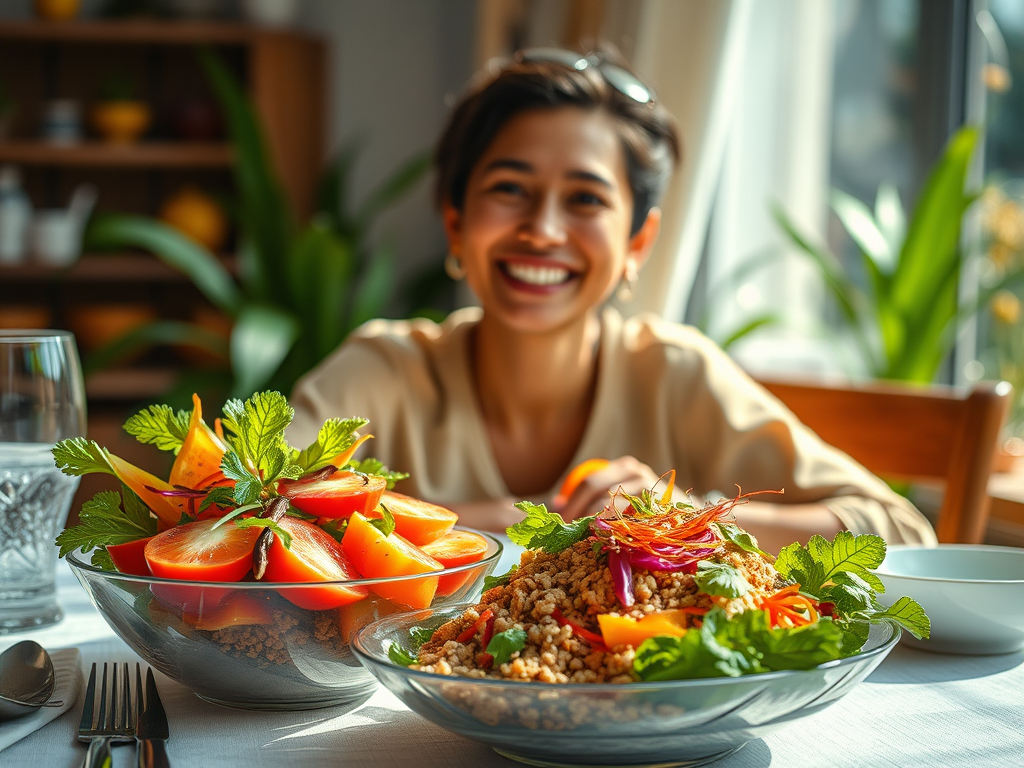
When I first heard this phrase from Michael Pollan, I immediately adopted it because it fully represents my approach to eating and nutrition. I like that it’s simple, it’s straightforward and that it’s flexible.
Let’s dive deeper into what it means:
Eat Food
Obviously, we eat food, one could think.
But do we?
What is “food”, after all?
Mr. Pollan and I agree that food means whole foods, typically something that either grows from the earth or has a mother. It is OK if it is minimally processed, like frozen or canned in its natural form. For example: fruits, vegetables, grains, seeds, beans, fish or eggs.
Many of the convenience foods available nowadays are edible products, yes, but that’s it. Things like Oreos, fish fingers, plant-based “meats”, Doritos, cream cheese, etc. These are all ultra-processed items that can be eaten and will not cause immediate harm. However, they are industrial creations, a conglomerate of ingredients bound together through different industrial processes.
Ultra processed “foods” are usually low in quality nutrients and high in less desirable things like sodium or calories, and therefore contribute to chronic diseases like adiposity, high blood pressure and type 2 diabetes.
Not Too Much
This simply means not to overeat, but to eat enough to:
- feel satiated
- meet our personal nutritional requirements
- maintain a healthy amount of fat tissue in our body.
We are born with an innate instinct to eat and to stop eating. Babies and infants self-regulate, especially if they are breast-fed. But as we grow older, we start to lose this natural skill. We need to follow specific eating schedules set by our jobs and family; we need to prepare food ourselves and we might resort to ultra processed food for convenience; and we need to deal with stressors that might lead us to overeating as a coping mechanism. We tend to move less, especially if we have sedentary jobs.
As a result, we can start storing unhealthy fat in our bodies. Excess of fat, or adiposity, is a condition that can result in a myriad of undesirable metabolic disorders. The main one is chronic inflammation, as fat cells produce certain substances (cytokines) that can be pro-inflammatory and result in disorders like type 2 diabetes or even promote cancer.
The golden rule is to eat foods that are high in nutrient density (high nutrients per calorie) and stop eating when you feel 80% full. A simple way to do this is to eat mindfully and slowly, to give time to the brain to process the signals that the stomach and the satiety hormone, leptin, send with this purpose.
Excess of fat can lead to leptin resistance, disrupting this satiety mechanism.
Mostly Plants
This means that most of the food we eat should be from vegetable sources. It does not mean that we need to become vegan or even vegetarian. Occasional animal products are fine and even necessary, like fatty fish for the Omega 3 fatty acids. I love the concept of plant-based or even better plant-forward, or flexitarian.
There are multiple reasons why we should consume mainly plants:
- Most plant-based foods are considered functional foods in their original, unprocessed state. They are loaded with nutraceuticals, that are substances that can prevent or even treat conditions, and optimize our health in general. Things like tomatoes (functional food) rich in lycopene (nutraceutical); flax seeds (functional food) rich in lignans (nutraceutical); chickpeas (functional food) rich in fiber (functional food), and so on. The only animal product that can be considered a functional food is fatty fish, for the omega 3s.
- Plant-based products have a much lower carbon footprint than animal based products, require less water to produce and in general are much more sustainable. An interesting fact is that most of the agriculture crops today are used to feed the animals we eat, not humans.
- Last but not least, animal welfare. What is done to the animals used for food is not aired, as it would be disturbing and obviously would impact the livestock industry. Milk or egg production are also harsh for the animals – especially caw milk.
Here are some ideas to start adopting a more plant-centric nutrition:
- Choose a day when no meat is eaten, like the popular “Meatless Mondays”
- Plan specific meals throughout the week without animal products
- Do at least one animal-free meal or snack a day
- Check some plant-based recipes online or a get book, and plan to try one (or a few!) each week.
- Avoid adding smalls amount of animal products to your dishes, like bacon croutons or cheese cubes.
So here you have it, an easy, sensible and flexible way to improve your nutrition, optimize your wellbeing, minimize the environmental impact and maximize animal welfare.
Shall we start?
 thrivebytheslice.com
2 thoughts on “Eat food. Not too much. Mostly plants.”